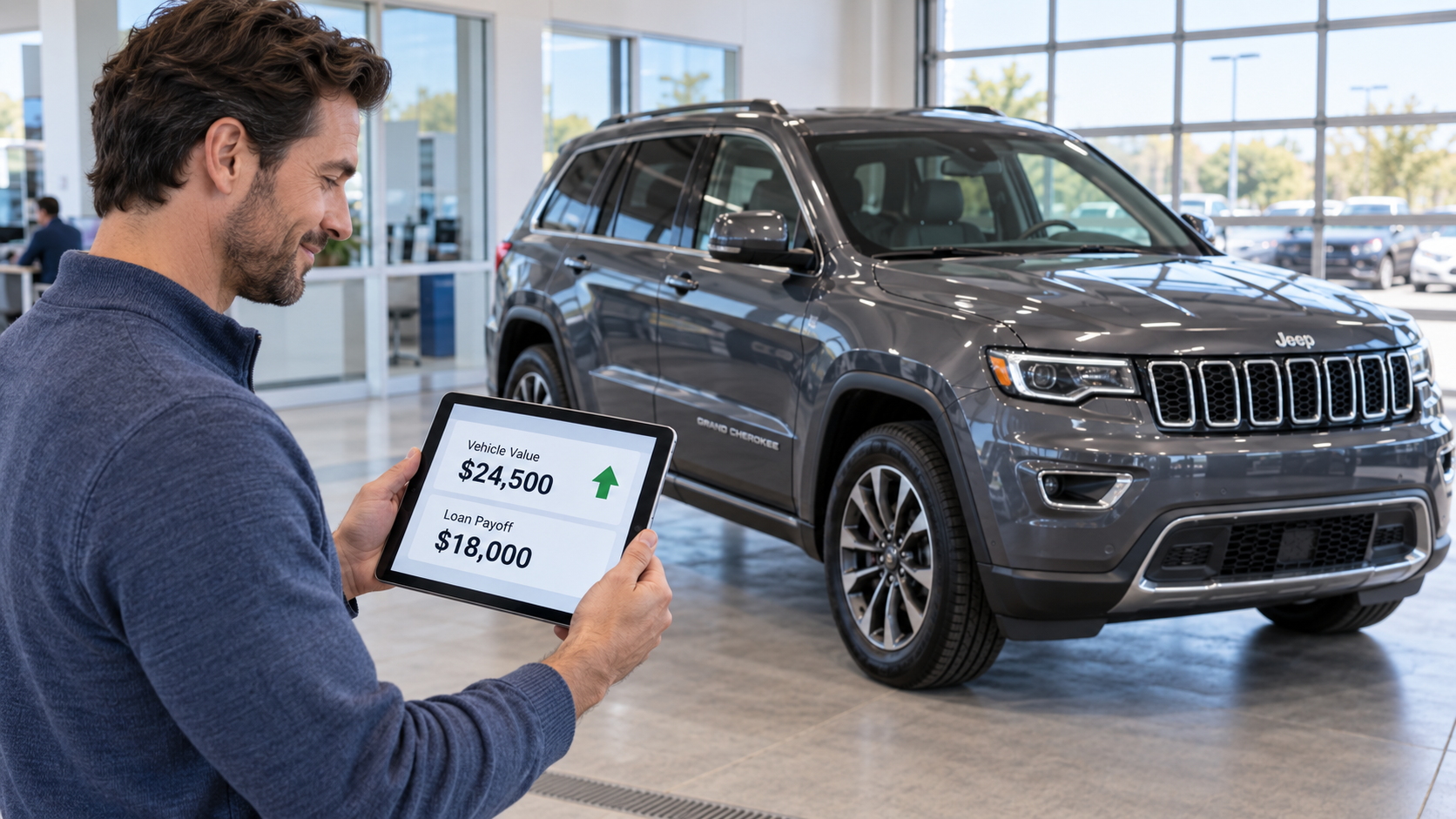
Do You Have Positive or Negative Equity in Your Car?
Knowing what your vehicle is worth compared with what you still owe can help you make a more informed decision about selling it, trading it, or keeping it longer.
The basic formula is simple:
Vehicle Value − Amount Owed = Vehicle Equity
If the result is above zero, you have positive equity. If the result is below zero, you have negative equity, sometimes described as being “upside down” on the loan. If the two numbers are nearly equal, you are close to breaking even.
What Is Positive Equity?
Positive equity means your vehicle is worth more than the amount required to pay off its loan. That difference belongs to you and can generally be applied toward your next vehicle when you trade.
Example of positive equity:
Estimated trade value: $18,000
Current loan payoff: $13,000
Estimated positive equity: $5,000
In this example, the dealership would typically pay the lender the $13,000 payoff, and the remaining $5,000 could be credited toward the next purchase. That equity can reduce the amount you need to finance in much the same way as a cash down payment.
What Is Negative Equity?
Negative equity means your loan payoff is higher than your vehicle's current value. The difference still has to be addressed when the vehicle is sold or traded.
Example of negative equity:
Estimated trade value: $18,000
Current loan payoff: $21,000
Estimated negative equity: $3,000
A trade-in with negative equity may still be possible. Depending on the transaction and lender approval, you may pay the difference in cash, include some or all of it in the next loan, or wait and continue paying down the current vehicle. Adding negative equity to a new loan increases the amount financed and may raise both the monthly payment and total interest cost.
How to Calculate Your Vehicle's Equity
- Get the current loan payoff. Contact your lender or check your online loan account. Ask for the payoff amount, not only the principal balance shown on your latest statement. The payoff may include interest accrued since your last payment and can change from day to day.
- Estimate the vehicle's current value. Use the correct year, make, model, trim, mileage, equipment, condition, and ZIP code. Online tools can provide a useful estimate, but an in-person appraisal can account for the vehicle's actual condition and current local demand.
- Subtract the payoff from the value. A positive result is estimated positive equity. A negative result is estimated negative equity.

Why an Online Estimate and an Appraisal May Differ
Vehicle-value websites are helpful starting points, but they cannot inspect your specific vehicle. The final appraised value may be affected by mechanical condition, accident history, tires, interior and exterior wear, warning lights, modifications, local supply, and current demand for that model.
It is also important to compare the right type of value. A private-party estimate reflects a sale directly to another individual, while a trade-in estimate reflects a different transaction. A private sale may produce a higher price, but it also requires you to advertise the vehicle, meet buyers, arrange payment, complete paperwork, and handle the existing lien if one remains.
What Can You Do With Positive Equity?
- Apply it toward your next vehicle. This can reduce the amount financed and may lower the monthly payment.
- Use it alongside cash down. Combining trade equity with a down payment can further reduce the loan amount.
- Sell the vehicle. After the lender is paid, the remaining proceeds are yours, subject to the terms of the sale and lien-release process.
What Are Your Options With Negative Equity?
- Keep the vehicle longer. Continuing scheduled payments may reduce the payoff until it is closer to the vehicle's value.
- Pay the difference. Covering some or all of the shortfall in cash prevents that amount from being carried into the next loan.
- Consider a less expensive replacement. A lower purchase price may make the overall transaction easier to manage.
- Review financing possibilities. A lender may permit some negative equity to be included in a new loan, but approval and the permitted amount depend on the full application and vehicle.
How Can You Build Positive Equity?
Equity improves when your loan balance falls faster than your vehicle loses value. A larger initial down payment, a shorter loan term, or extra principal payments can help. Before making extra payments, confirm with your lender that there is no prepayment penalty and that the additional amount will be applied to principal.
Avoiding repeated negative-equity rollovers also matters. Carrying an old balance into each new loan makes it harder for the next vehicle's value to catch up with the amount owed.
Find Out Where Your Trade Stands
Start with an online estimate, then let the team at Uftring Chrysler Dodge Jeep Ram evaluate your vehicle and help you compare the numbers clearly.
Value Your Trade Contact Our TeamImportant: Online vehicle values are estimates and are not purchase or trade offers. Final value depends on an inspection and current market conditions. Financing is subject to lender approval. Loan terms and the treatment of negative equity vary by applicant, lender, vehicle, and transaction. This article is for general educational purposes and is not financial or legal advice.